
Loading…
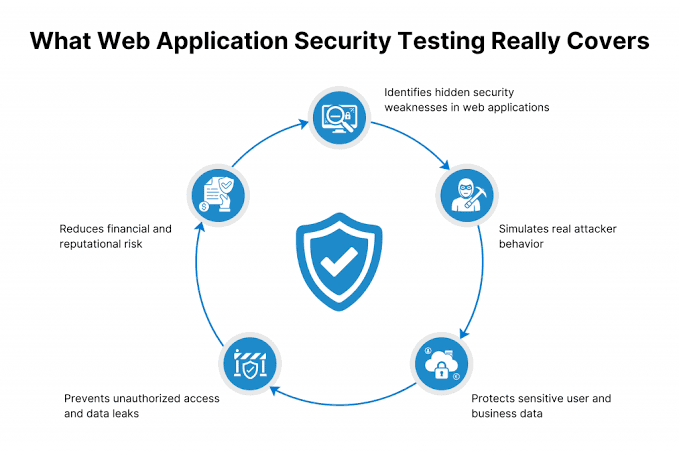
Application security is a distinct layer from network security — authentication, input validation, dependency hygiene, secrets, and API security. Here's what each part actually means.
"Cybersecurity" often gets discussed at the network or infrastructure level — firewalls, VPNs, perimeter defenses. Application security is a distinct, narrower layer: the security of the actual software a business builds and runs, and the vulnerabilities that live in code, dependencies, and configuration rather than in network topology.
Authentication confirms who a user is; authorization confirms what they're allowed to do once identified — and the two are easy to conflate in a way that creates real gaps. A common, serious mistake is checking authentication (is this a logged-in user?) without properly checking authorization (is this specific user allowed to access this specific resource?), which can let one user access another user's data simply by guessing or changing an ID in a request.
Any data an application accepts from outside — form fields, URL parameters, uploaded files, API requests — should be treated as untrusted until validated. Failing to validate input is at the root of some of the most common and longest-standing web vulnerabilities, including injection attacks against databases and scripts that run in another user's browser.
Modern applications are built on a large number of third-party libraries, and a vulnerability in any one of them becomes a vulnerability in the application that uses it. Keeping dependencies current, and knowing which ones a project actually depends on, is ongoing maintenance work — not a one-time setup task.
API keys, database credentials, and other secrets should never live in source code or get committed to version control — a mistake that happens more often than it should, and one that's easy to make without a deliberate process for handling secrets separately from application code.
As more applications expose APIs — to their own frontend, to partners, or publicly — the API surface itself needs the same scrutiny as a traditional web page: authentication, authorization, input validation, and rate limiting to prevent abuse.
Security isn't a property an application either has or doesn't have at launch — new vulnerabilities in dependencies get discovered after the fact, and code changes can introduce new gaps. Regular testing and monitoring for unusual activity are what turn security from a launch-day checklist into an ongoing practice.
No application, provider, or process can honestly promise to be "100% secure." A credible security practice talks about reducing risk, defense in depth, and how quickly issues are found and fixed — not guarantees.
6STANZA treats application security as part of how software is built, not a separate audit bolted on afterward — covering authentication, input handling, dependency hygiene, and secrets management as standard practice.