
Loading…
Cloud migration isn't one event — it's discovery, strategy, data migration, testing, and cutover, each with its own risks. Here's what each phase actually covers.
Cloud migration is often talked about as a single event — "we moved to the cloud" — but it's really a sequence of distinct phases, each with its own risks. Understanding those phases makes it much easier to evaluate a migration plan, and to spot one that's skipping steps.
Before anything moves, a migration should start with an honest inventory: what applications and data actually exist, how they depend on each other, and which ones are safe to move with minimal change versus which ones need re-architecting first. Skipping this step is one of the most common causes of migrations that stall or run over budget — dependencies that weren't mapped tend to surface as production incidents instead.
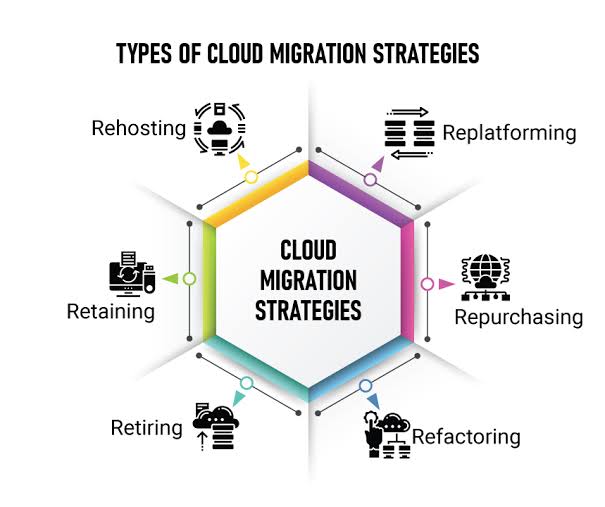
Not every application needs to be rebuilt for the cloud. Common strategies range from "rehost" (moving a workload with minimal changes, sometimes called lift-and-shift) to "replatform" (small optimizations without a full rewrite) to "refactor" (rebuilding to take advantage of cloud-native services). The right strategy depends on the application's age, how business-critical it is, and how much change the organization can absorb at once — not on which approach sounds most modern.
Moving data is rarely as simple as copying files — it involves maintaining data integrity during transfer, handling downtime windows or live syncing, and making sure access controls and encryption are configured correctly in the new environment before any sensitive data lands there. Security configuration should be part of the migration plan itself, not a task left for "after we're live."
A migrated system should be tested for functional correctness and performance in the new environment before it takes real traffic — ideally running in parallel with the existing system long enough to catch discrepancies. Cutover, the moment traffic actually switches to the new environment, is the highest-risk step in the whole process and benefits from having a clear rollback plan, not just a forward plan.
No responsible migration plan can promise zero risk or guaranteed outcomes. What a good plan can promise is a tested rollback path and monitoring that surfaces problems quickly if they occur.
Migration doesn't end at cutover. Cloud costs and performance both benefit from a period of observation and tuning afterward — rightsizing resources that were over-provisioned out of caution, and fixing anything that behaves differently under real production load than it did in testing.
6STANZA treats discovery and dependency mapping as the first real deliverable of a cloud migration — not a formality before the "real work" — because most migration risk is decided before a single workload actually moves.